# Pieter Levels’ Genius Programmatic SEO Strategy Explained
Table of Contents
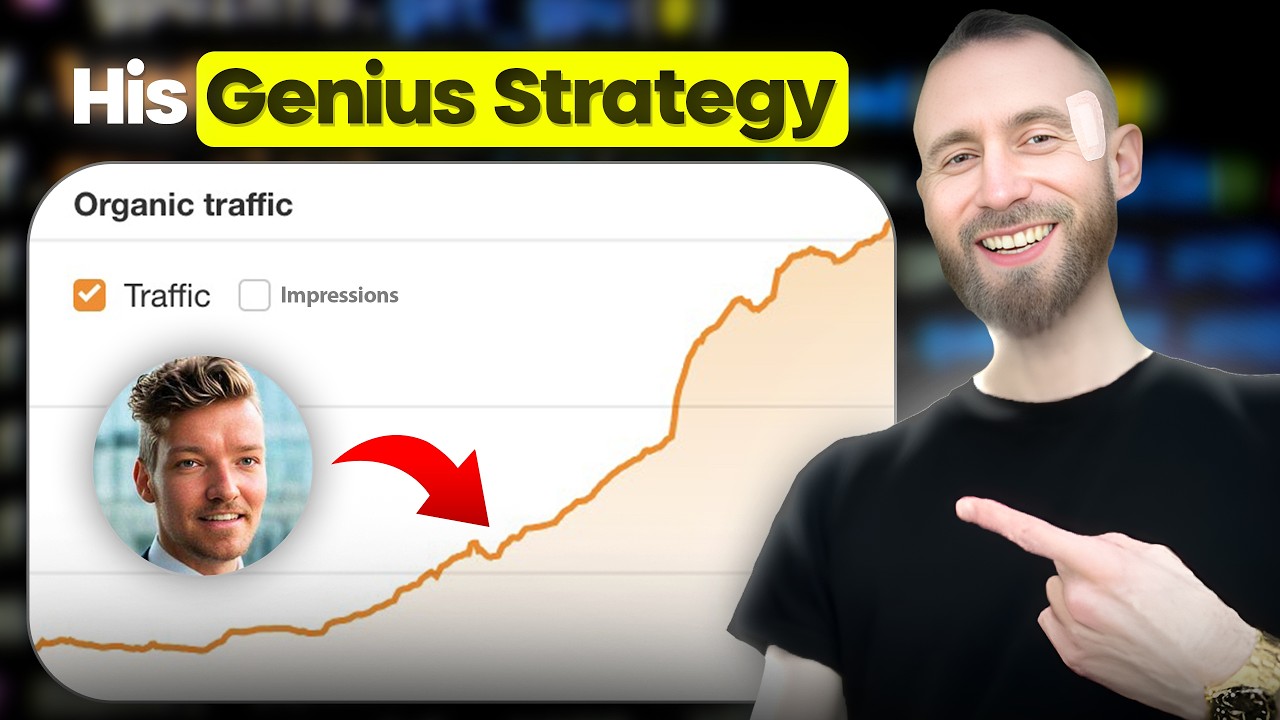
These notes are based on the YouTube video by Edward Sturm
Key Takeaways
- Programmatic SEO works when each generated page delivers genuine value – thin, duplicated pages waste crawl budget and hurt rankings. (Learn more about scaling with AI in the Ultimate AI SEO Playbook)
- Pieter Levels’ formula:
- Start with a rich data source (jobs, city stats, AI‑generated images, etc.).
- Build template pages with variables that pull in that data.
- Publish gradually to protect crawl budget and let Google index high‑quality pages first.
- Four flagship projects illustrate the method:
- Remote OK – roughly 590 k indexed pages, each company or job‑seeker profile is a unique landing page.
- Photo AI – about 61 k pages, covering every image concept, user‑generated prompt, and inspiration idea.
- Nomad List – around 20 k pages, one per city/country with cost‑of‑living, internet speed, weather, etc.
- Interior AI – roughly 4 k pages, niche AI‑generated interior design results.
- Engagement & backlinks are essential before scaling; a strong brand, backlinks1 and branded searches give Google the “trust” needed to rank thousands of pages.
- Answering search intent is the only real guardrail: if the page solves the user’s problem, massive scale is safe and beneficial. (See the latest trends in intent‑focused content in the Content Marketing’s About to Change Forever (2026 Strategies))
🔗 See Also: The Ultimate AI SEO Playbook - Rank #1 in ChatGPT, Perplexity, Gemini & More
💡 Related: How Claude Code Ranked Me FIRST on Google (It’s OVER for SEO Agencies)
Detailed Explanations
What Is Programmatic SEO?
Programmatic SEO = automated creation of thousands of high‑value pages by combining a template with dynamic variables (e.g., location, job title, image tag).
- Template – the HTML/layout skeleton (title, meta tags, headings, content blocks).
- Variables – data points that change per page (city name, salary range, AI prompt).
- Dependents – conditional sections that appear only when certain variables exist (e.g., “Remote tech‑stack jobs in Berlin” appears only for cities with tech‑stack data).
The more granular the variables, the more specific the resulting keyword target.
Pieter Levels’ Execution Blueprint
| Step | Action | Why It Matters |
|---|---|---|
| 1️⃣ Data Collection | Gather structured (databases, CSVs) and unstructured (user‑generated content) data. | Provides the raw material for unique pages. |
| 2️⃣ Template Design | Create SEO‑friendly templates with placeholders for each variable. | Guarantees consistent markup and on‑page SEO signals. |
| 3️⃣ Variable Mapping | Map each data point to a placeholder; include conditional logic for optional sections. | Ensures each page is unique and relevant to its query. |
| 4️⃣ Gradual Publishing | Deploy pages in batches (e.g., 5‑10 k at a time). Monitor crawl budget and indexing. | Prevents Google from throttling the site and protects overall SEO health. |
| 5️⃣ Amplify Authority | Secure backlinks, encourage branded searches, and drive social engagement before scaling. | Signals trust to Google, allowing deeper indexing of the new pages. |
| 6️⃣ Continuous Optimization | Track rankings, click‑through rates, and user metrics; prune or improve low‑performing pages. | Keeps the site lean and maintains high relevance. |
Example Template (pseudo‑code)
<!DOCTYPE html><html lang="en"><head> <title>{{job_title}} at {{company_name}} – Remote Jobs</title> <meta name="description" content="Find remote {{job_title}} openings at {{company_name}}. Apply today and work from anywhere."></head><body> <h1>{{job_title}} – {{company_name}}</h1> <p>Location: Remote ({{company_location}})</p> {% if tech_stack %} <h2>Tech Stack</h2> <ul> {% for tech in tech_stack %} <li>{{tech}}</li> {% endfor %} </ul> {% endif %} <a href="{{apply_link}}">Apply Now</a></body></html>The placeholders ({{…}}) are replaced with data from the jobs database for each unique page.
Project Spotlights
Remote OK
- Pages: ~590 k (company pages, job‑seeker profiles, tech‑stack listings).
- Traffic: roughly 21 k organic visitors per month (estimate based on publicly shared metrics).
- Value: Recruiters find talent; job‑seekers gain visibility → a win‑win that signals high relevance to Google.
Photo AI
- Pages: ~61 k indexed, ranking for thousands of keywords (the video cites ~7.8 k).
- Revenue: reported to generate around $148 k/month from organic traffic (figures shared by Levels in public updates).
- Approach: Every image concept (e.g., “anime character”) gets a dedicated landing page; even user‑generated prompts receive their own indexed page.
Nomad List
- Pages: ~20 k (city‑by‑city data).
- Traffic: ~8 k organic visits per month, translating to about $4.9 k in ad revenue.
- Key Data Points: Cost of living, internet speed, weather, visa requirements, etc.
Interior AI
- Pages: ~4 k niche AI‑generated interior design results.
- Purpose: Capture long‑tail queries like “mid‑century modern living room ideas AI”.
Why Engagement & Backlinks Matter
- Domain Authority (DA): New pages inherit the authority of the host domain. Without a strong DA, Google may treat the flood of pages as low‑quality.
- Branded Searches: Users typing “Remote OK” or “Photo AI” generate traffic spikes that reinforce the site’s relevance.
- Link Juice: Early backlinks1 (from press releases, partner sites, or community posts) help Google crawl deeper into the site.
🔗 See Also: The Secret to Get ChatGPT to Recommend Your Business… Branded Mentions
💡 Related: How Claude Code Ranked Me FIRST on Google (It’s OVER for SEO Agencies)
Rule of thumb: Before scaling to hundreds of thousands of pages, ensure you have a baseline of quality backlinks and a measurable amount of branded traffic.
Common Pitfalls & How to Avoid Them
| Pitfall | Consequence | Mitigation |
|---|---|---|
| Thin, duplicated content | Crawl‑budget waste, possible penalties. | Verify each page has unique, user‑focused content. |
| Launching all pages at once | Google may throttle indexing; site slowdown. | Use a phased rollout (e.g., 5‑10 k per week). |
| Ignoring search intent | High bounce, low dwell time → ranking drop. | Conduct keyword‑intent mapping; write copy that solves the query. |
| No external signals | Low authority, poor rankings despite volume. | Build backlinks, encourage social shares, run PR for new launches. |
| Neglecting analytics | Undetected underperforming pages. | Set up automated monitoring (rankings, CTR, conversions) and prune or improve low‑performers. |
Frequently Asked Question (from the thread)
Q: Does programmatic SEO hurt Google rankings?
A: Only if the pages are low‑value or duplicate. Pieter’s strategy succeeds because every page is unique, useful, and aligned with user intent. When that condition is met, massive scale is not a penalty—it’s a ranking advantage.
Summary
Programmatic SEO is not a shortcut for mass‑producing cheap pages; it’s a disciplined system that turns rich data into individually valuable landing pages. Pieter Levels exemplifies the approach:
- Start with high‑quality, structured data (jobs, city stats, AI prompts).
- Design flexible templates that adapt to each variable, ensuring uniqueness.
- Publish gradually to protect crawl budget.
- Earn backlinks and brand searches before scaling, giving Google confidence in the site’s authority.
- Continuously audit for relevance and performance.
When executed correctly, programmatic SEO can generate hundreds of thousands of indexed pages, drive substantial organic traffic, and convert that traffic into real revenue—without compromising the site’s reputation or Google’s trust. The key is always: focus on the searcher’s intent and deliver genuine value.