# If I Wanted to Build a $1M Voice AI Business in 2026, I’d Do This
Table of Contents
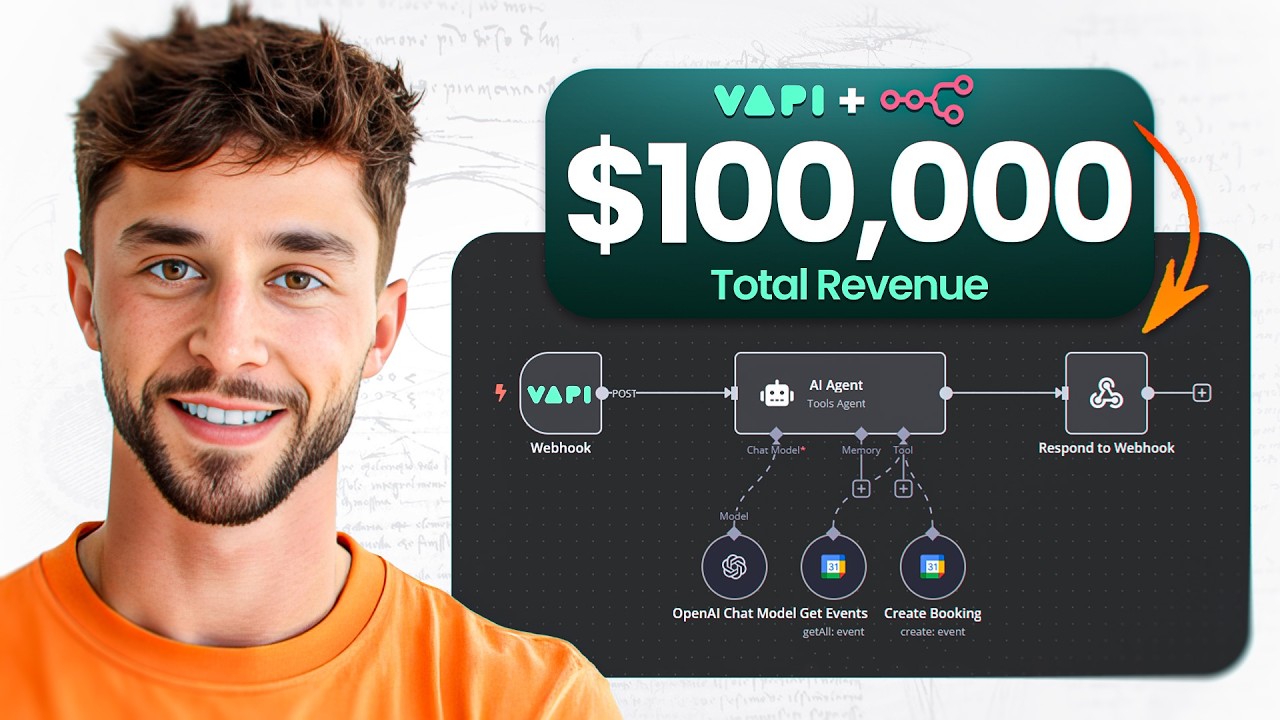
These notes are based on the YouTube video by Liam Ottley
Key Takeaways
- Voice AI delivers strong, data‑backed ROI – Multiple studies show 3‑4× return on investment and pay‑back periods of 60‑90 days, making it one of the highest‑ROI AI niches for clients.
- Three core building blocks:
- Platform selection (e.g., Vapi, Voiceflow, Twilio, etc.).
- Prompt engineering – a comprehensive instruction set that guides the agent’s behavior.
- Function calls – integration points for external actions (booking, SMS, call transfer, etc.).
🔗 See Also: How to Build a Page AI Will Love (AEO Checklist)
- Production‑grade agents require a disciplined testing regime: internal testing, live testing, then automated testing/monitoring.
- Automated testing platforms (e.g., “Reliable”): simulate real callers, score each interaction, and surface failures before they reach real users. (If you use a different tool, the same principles apply.)
💡 Related: How to Build AI Systems That Actually Run Your Business (Not Just Chat)
- Retainer model: $6‑12 k setup fee plus a monthly support/maintenance retainer (≈ $1‑5 k) that covers monitoring, bug fixes, and iterative improvements. These figures are industry‑typical estimates and can vary by project scope and geography.
- Skill acquisition: You can become a Voice‑AI agency founder without a formal computer‑science degree; focused YouTube tutorials + hands‑on iteration are sufficient, though a willingness to learn basic API concepts and testing practices greatly speeds progress.
Detailed Explanations
1. Building a Voice AI Agent
| Step | What to Do | Why It Matters |
|---|---|---|
| Choose a platform | Vapi, Voiceflow, Twilio, etc. | Determines the UI for flow design, API access, and native integrations. |
| Craft the prompt | Write a detailed system prompt that defines tone, scope, compliance language, and edge‑case handling. | The prompt is the primary control surface for a no‑code agent; combined with the underlying LLM, it shapes behavior and prevents drift. |
| Define function calls | Set up APIs for: • Appointment booking (Google Calendar) • SMS sending • Call transfer • Data retrieval from CRMs | Enables the agent to perform real actions rather than just talk. |
Prompt Engineering Tips
- Be explicit about compliance – e.g., “State that this call is recorded” and “Mention AI disclaimer at the start.”
- Structure for context – group related instructions, use bullet lists inside the prompt, and reference function names consistently.
- Iterate – early testing will reveal missing context; refine the prompt before moving to live traffic.
- Designing prompts effectively can be further explored in How I Get AI To Follow My Designs (In‑Depth Walkthrough).
2. Common Use Cases
| Category | Example | Typical Flow |
|---|---|---|
| Inbound receptionist | Answer calls, qualify leads, book appointments, transfer to human | Simple IVR → AI qualification → Calendar integration |
| Outbound “speed‑to‑lead” | Auto‑dial new leads within seconds of capture, qualify, and schedule | AI calls lead → quick questionnaire → either book or handoff |
| Emergency routing | Home‑services (plumbing, HVAC) need urgent dispatch | AI identifies emergency keywords → escalates to live agent or triggers priority workflow |
Note: Cold‑calling is heavily regulated in the U.S.; only use consent‑based outbound strategies.
3. Testing Workflow
-
Internal Testing (≈ 2 weeks)
- Team members manually call the agent.
- Verify core flows, collect early feedback, and acclimate the client to the voice.
-
Live Testing (≈ 2 weeks)
- Deploy to a small subset of real callers.
- Capture real‑world variations and user sentiment.
-
Automated Testing (≈ 2 weeks)
- Use an automated testing platform (e.g., Reliable or a comparable tool) to generate synthetic callers (different personas, accents, noise levels).
- Run predefined test cases and receive a quantitative score (0‑100).
Test Cases & Scoring
- Priority levels: Critical, Medium, Low.
- Scoring algorithm (illustrative):
Score = 100 - Σ (weight_i × failure_i)where weight_i depends on priority (Critical > Medium > Low)
- Interpretation:
- ≥ 90 – Excellent; ready for full rollout.
- 80‑89 – Good; minor tweaks needed.
- < 70 – Unacceptable; revisit prompt or function logic.
The three‑phase testing approach is a best‑practice framework widely recommended for production‑grade voice agents, though exact timelines may differ per project.
🔗 See Also: How to Build AI Systems That Actually Run Your Business (Not Just Chat)
4. Automated Monitoring (Reliability in Production)
- Continuous scoring of every live call.
- Alerting for:
- Critical failures (e.g., missed emergency path).
- Compliance breaches (missing AI disclaimer).
- Component outages (transcriber, LLM, API).
- Synthetic pulse calls when traffic is low to keep health metrics fresh.
- Dashboard: Shows call volume, conversion rates, hang‑up percentages, and function‑call success rates.
5. Business Model & Pricing
| Item | Typical Range* | What’s Included |
|---|---|---|
| Setup fee | $6 k – $12 k (USD) | Prompt engineering, function integration, initial testing, hand‑off of platform account. |
| Monthly retainer | $1 k – $5 k | Ongoing monitoring, bug fixes, quarterly prompt refinements, optional development hours for new features. |
| Support packages | Tiered (basic → premium) | Response SLA, dedicated account manager, custom analytics dashboards. |
*These figures are estimates based on recent agency projects; actual pricing will vary with client size, complexity, and regional market rates.
- Client ownership: Agencies hand over the full Vapi/Twilio (or equivalent) account so the client can view analytics directly.
- Revenue stability: Retainers provide predictable cash flow; upgrades (new flows, extra personas) generate additional billable hours.
💡 Related: What Is AEO? How to Get Your Brand Found in AI Search
6. Path to Mastery (No Formal Tech Background Required)
- Consume free content – YouTube tutorials (e.g., Brendan’s 20‑minute “build a voice agent” videos).
- Iterative practice – Build a simple inbound receptionist, test, then add complexity.
- Leverage community – Join AI entrepreneur groups, ask for feedback on prompts and flows.
- Document failures – Keep a spreadsheet of bugs, fixes, and priority to accelerate future projects.
- Scale – Once you have a repeatable pipeline (dev → test → monitor), package it as a service and start charging retainers.
While a formal CS degree isn’t mandatory, gaining basic familiarity with REST APIs, JSON payloads, and version‑controlled testing will smooth the learning curve.
Summary
Voice AI is currently one of the highest‑ROI AI niches, and building a $1 M business around it is achievable with a clear technical and operational framework. The process breaks down into three fundamentals—choosing the right platform, crafting a robust prompt (in concert with the underlying LLM), and wiring up function calls. Production‑grade agents demand a disciplined testing regime: internal, live, and automated testing using a platform like Reliable (or any comparable tool), which simulates diverse callers, scores interactions, and continuously monitors health.
A viable business model combines a sizable upfront setup fee with a monthly retainer for monitoring, compliance, and incremental improvements. Crucially, you don’t need a computer‑science degree; disciplined self‑learning, hands‑on iteration, and community engagement can take you from a hobbyist to a profitable agency founder.
By following the outlined workflow, agencies can deliver reliable voice agents that book appointments, qualify leads, and handle emergency routing—unlocking recurring revenue streams in a rapidly expanding market.