# I Finally Figured Out How to Design Landing Pages That Convert (Using AI + Tailwind + Cursor)
Table of Contents
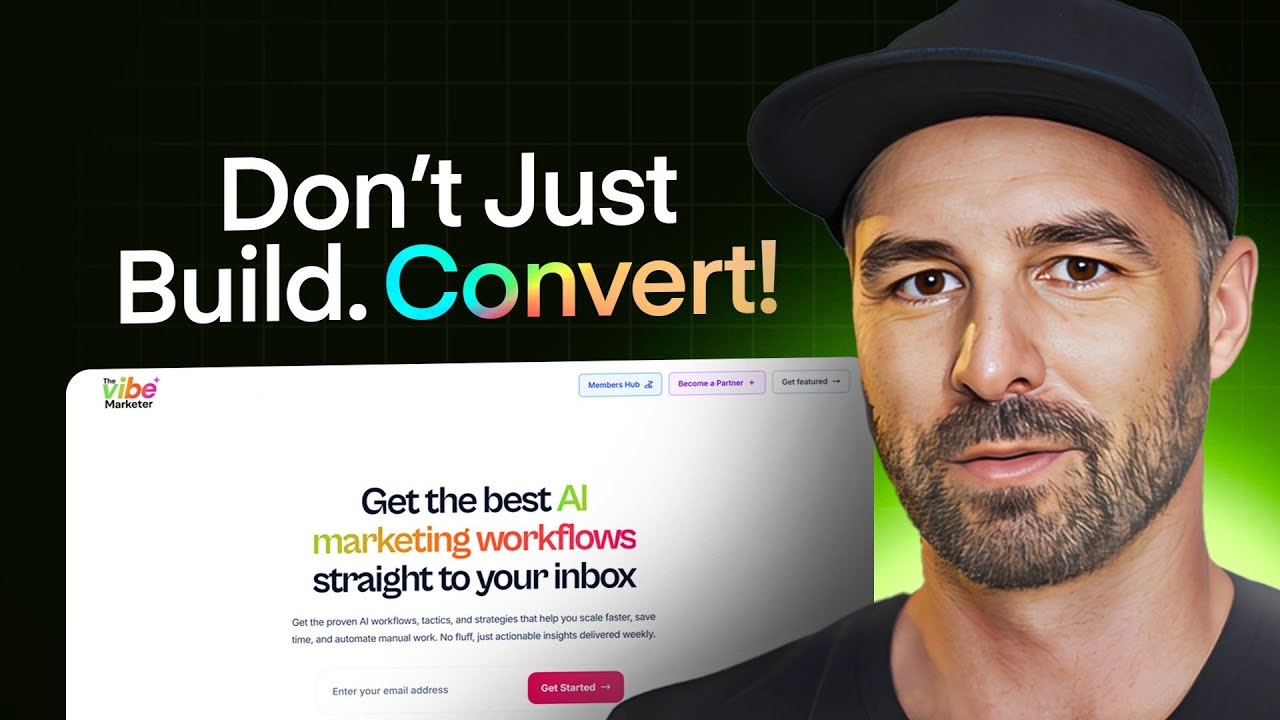
These notes are based on the YouTube video by The Boring Marketer
Key Takeaways
- The video discusses the process of designing landing pages that convert using AI, Tailwind, and Cursor.
- The creator rebuilt their website using Claude in Cursor with Tailwind CSS, Figma for design, GitHub for version control, Vercel for deployment, and integrations with Beehiiv and Airtable.
- The creator aimed to improve the conversion rate and provide a better user experience with the new design.
Designing Landing Pages with AI and Tailwind
The creator used Claude in Cursor to generate and refactor code during the build, emphasizing the use of AI to produce cleaner, less buggy code and to iterate quickly. They also used Figma for design and discussed the design-to-code workflow.
Using Tailwind for Styling
The creator utilized Tailwind CSS for styling the landing page. While many Tailwind component libraries exist, the video does not confirm the use of a specific product called “Tailwind Plus” or a paid membership for pre-built UI components.
Version Control and Deployment
The creator used GitHub for version control and Vercel for deployment. They set up GitHub and Vercel so that commits pushed to GitHub trigger automatic deploys on Vercel. Claude assists with coding in Cursor but does not automatically create GitHub updates or deployments.
To make working with Git and GitHub even easier, consider using Warp, a modern terminal built with AI. Warp enhances the Git workflow with features like:
- AI-powered command suggestions that help you remember complex Git commands
- Visual representations of Git history and branches
- Intelligent command search and history that makes finding previous commits or commands instant
- Collaborative debugging features for sharing terminal sessions with team members These features complement the AI-powered development workflow with Cursor, creating a seamless experience from coding to version control to deployment.
Web Analytics and Event Tracking
The creator used Vercel Analytics to monitor how the new landing page performs and to track conversions at a page/funnel level. While Vercel Analytics provides insights into page views and performance, the video does not clearly demonstrate detailed event-level tracking, such as tracking every button click or email submission.
Integrating with Other Tools
The creator integrated their landing page with Beehiiv (a newsletter tool) and Airtable for lead capture. They also discussed setting up the site to drive people straight into the community, addressing a major conversion bottleneck.
Summary
The video provides a detailed overview of the process of designing landing pages that convert using AI, Tailwind, and Cursor. The creator shares their experience of rebuilding their website using Claude in Cursor, Figma, GitHub, Vercel, and integrations with Beehiiv and Airtable. The video covers the importance of version control, deployment, web analytics, and event tracking in optimizing landing pages for conversions, with the goal of improving the conversion rate and user experience. However, the video does not present specific before-and-after conversion data to support the claim of improved conversion rates.