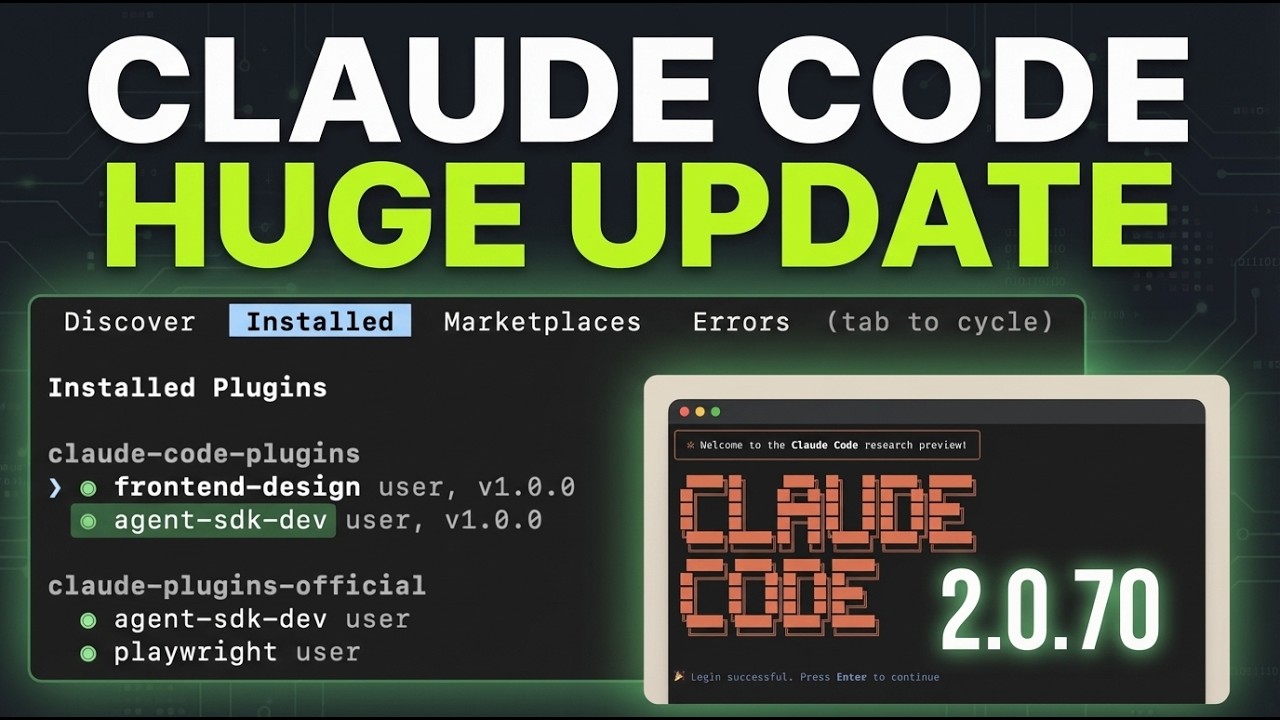
# Claude Code’s New Native Skills Just Changed Everything

Tom Brewer
Table of Contents

These notes are based on the YouTube video by Income stream surfers


Claude Code Update

The latest developments in Claude Code have introduced the Claude Agent SDK, significantly enhancing its capabilities. The Claude Agent SDK allows users to build custom agents and applications around Claude, as seen in These New Claude Code Features are HUGE (2.0.67), which highlights the key insights and notes from the YouTube video.

Key Features

  • Claude Agent SDK for building custom agents and applications
  • Ability to create custom commands
  • Integration with various frameworks for building servers, such as FastAPI (although this requires manual setup)
  • Support for extensibility through the Model Context Protocol (MCP)

Building an AI-Integrated App

To build an app, users can follow these steps:

  • Install the Claude Agent SDK using Python or TypeScript package managers
  • Define the project requirements, such as the type of agent and the desired output
  • Use the Agent SDK to generate code for the app
# Example code for building an AI-integrated app
import fastapi
app = fastapi.FastAPI()
# Define the agent and its capabilities
# Note: The following code is a hypothetical example and may not reflect the actual implementation
agent = ClaudeAgent()
agent.define_capability("content_writer")
# Generate the code for the app
code = agent.generate_code()

For more information on building AI-integrated apps with Claude Code, check out The EASIEST way to build iOS apps with Claude Code (Opus 4.5), which provides key insights and notes from a relevant YouTube video.

Plugin Ecosystem

The Claude Agent SDK introduces a framework for extensibility, allowing users to extend the capabilities of Claude Code. While there isn’t a formal plugin marketplace, developers can create custom plugins and integrations using the Model Context Protocol (MCP).

Monetization Opportunities

The update also creates opportunities for monetization, such as:

  • Adding ads to the app
  • Charging users for access to the app
  • Offering premium features or support To learn more about best practices for using Claude Code, including monetization strategies, refer to Claude Code best practices.

Summary

The latest developments in Claude Code have significantly enhanced its capabilities, allowing users to build custom agents and applications around Claude. The introduction of the Claude Agent SDK has also created new opportunities for extension and monetization. With its improved capabilities and flexibility, Claude Code is now an even more powerful tool for building AI-integrated apps.

💡 Related: These New Claude Code Features are HUGE (2.0.67)

Tom Brewer Avatar

Thanks for reading my notes! Feel free to check out my other notes or contact me via the social links in the footer.

# Frequently Asked Questions

What is the Claude Agent SDK and how does it enhance Claude Code's capabilities?

The Claude Agent SDK is a significant update to Claude Code, allowing users to build custom agents and applications around Claude. This SDK enables the creation of custom commands and integrates with various frameworks, such as FastAPI, for building servers. With the Claude Agent SDK, users can define project requirements and generate code for their apps, making it a powerful tool for building AI-integrated apps. This update has significantly enhanced Claude Code's capabilities, providing new opportunities for extension and monetization.

How can I build an AI-integrated app using the Claude Agent SDK?

To build an AI-integrated app, users can follow a few steps: install the Claude Agent SDK using Python or TypeScript package managers, define the project requirements, and use the Agent SDK to generate code for the app. The SDK provides a framework for building custom agents and applications, and users can define the agent's capabilities and generate code using the `agent.generate_code()` method. This process allows users to create custom apps with AI capabilities, as seen in the example code provided.

What monetization opportunities are available with the updated Claude Code?

The updated Claude Code creates new opportunities for monetization, such as adding ads to the app, charging users for access, or offering premium features or support. With the introduction of the Claude Agent SDK, developers can build custom apps and charge for access or offer in-app purchases. Additionally, the plugin ecosystem allows for the creation of custom plugins and integrations, providing further opportunities for monetization. For more information on best practices for using Claude Code, including monetization strategies, users can refer to the Claude Code best practices guide.

Can I extend the capabilities of Claude Code using the Model Context Protocol (MCP)?

Yes, the Claude Agent SDK introduces a framework for extensibility, allowing users to extend the capabilities of Claude Code using the Model Context Protocol (MCP). While there isn't a formal plugin marketplace, developers can create custom plugins and integrations using the MCP, providing a flexible way to enhance Claude Code's capabilities. This framework enables users to build custom agents and applications, and create custom plugins to integrate with other tools and services.

What is the significance of the Claude Agent SDK in the latest Claude Code update?

The Claude Agent SDK is a significant update to Claude Code, as it allows users to build custom agents and applications around Claude. This update has significantly enhanced Claude Code's capabilities, providing new opportunities for extension and monetization. The Claude Agent SDK enables the creation of custom commands, integration with various frameworks, and support for extensibility through the Model Context Protocol (MCP). This update has changed the way users can interact with Claude Code, making it a more powerful tool for building AI-integrated apps.

Continue Reading